
Welcome to the Gene Scene! Each week, we will explore a gene from the ACMG Secondary Findings list—genes identified by the American College of Medical Genetics and Genomics as having clear, actionable health implications. These genes are included because they’re linked to serious but preventable or manageable conditions when identified early. Here, we focus on the condition that led to the gene’s inclusion on the list, providing clear, relevant information that supports your clinic. To subscribe to the Gene Scene, contact your local GSL or send a request to info@ambrygen.com.
GENE SCENE SPOTLIGHT: This gene is not on the ACMG Secondary Findings List, but has been in the news due to the major impact that emerging treatments have had for some patients diagnosed with an HPDL-related neurological disorder.
To access the Gene Scene archives, visit our blog.
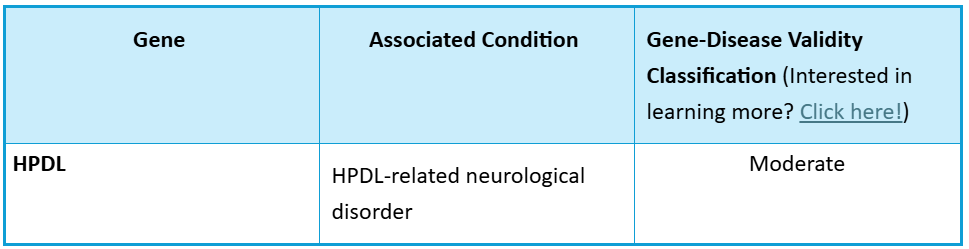
Clinical Phenotype Summary:
The HPDL gene is located on chromosome 1p34.1 and encodes the 4-hydroxyphenylpyruvate dioxygenase-like protein. Pathogenic variants in this gene are known to cause HPDL-related neurological disorder, which is inherited in an autosomal recessive fashion. HPDL-related neurological disorder is associated with a spectrum of phenotypes ranging from an infantile-onset syndromic neurodegenerative disorder to adolescent-onset pure spastic paraparesis.
The syndromic phenotype is characterized by:
- Spasticity
- Motor Delay
- Mild to severe itellectual disability
- Seizures
- Developmental regression
- Microcephaly
- Opthalmological abnormalities and/or visual impairment
- Abnormal brain MRI
Brain MRI abnormalities reported are variable and include agenesis or hypoplasia of the corpus callosum, white matter abnormalities, cerebellar atrophy, and cerebral atrophy. Other features seen in a minority of patients include acute respiratory failure, reduced nerve conduction velocities, pseudobulbar signs, ataxia, dystonia, upper limb involvement, and pyramidal signs.
Unique Considerations:
HPDL-related neurological disorder is a progressive disorder and episodic neurological and respiratory decompensation have been reported. The pure spastic paraparesis phenotype that can be associated with HPDL is characterized by normal early development followed by onset of progressive spasticity and gait disturbances in adolescence.
Biallelic loss of function has been reported as the mechanism of disease for HPDL-related neurological disorder (Husain, 2020; Ghosh, 2021; Wiessner, 2021).
Ambry Knows Genes:
Blog Posts:
A Genetic Counselor’s Experience with Proactive Reanalysis through Patient for Life: An Interview with Kelly Minks, MS, CGC
Leading with Science: Brad Power MS, CGC outlines a case example of HPDL-related neurological disorder
Citations:
Husain RA, et al. (2020) Am J Hum Genet 107(2):364-373. PMID: 32707086
Ghosh SG, et al. (2021) Genet Med 23(3):524-533. PMID: 33188300
Wiessner M et al. (2021) Brain 144(5):1422-1434. PMID: 33970200
Ambry Genetics Gene-Disease Validity Scheme
Each week, we explore a gene from the ACMG Secondary Findings list—genes identified by the American College of Medical Genetics and Genomics as having clear, actionable health implications. These genes are included because they’re linked to serious but preventable or manageable conditions when identified early.
To learn more about the ACMG Secondary Findings list, click here
To reach all previous Gene Scene emails, click here.