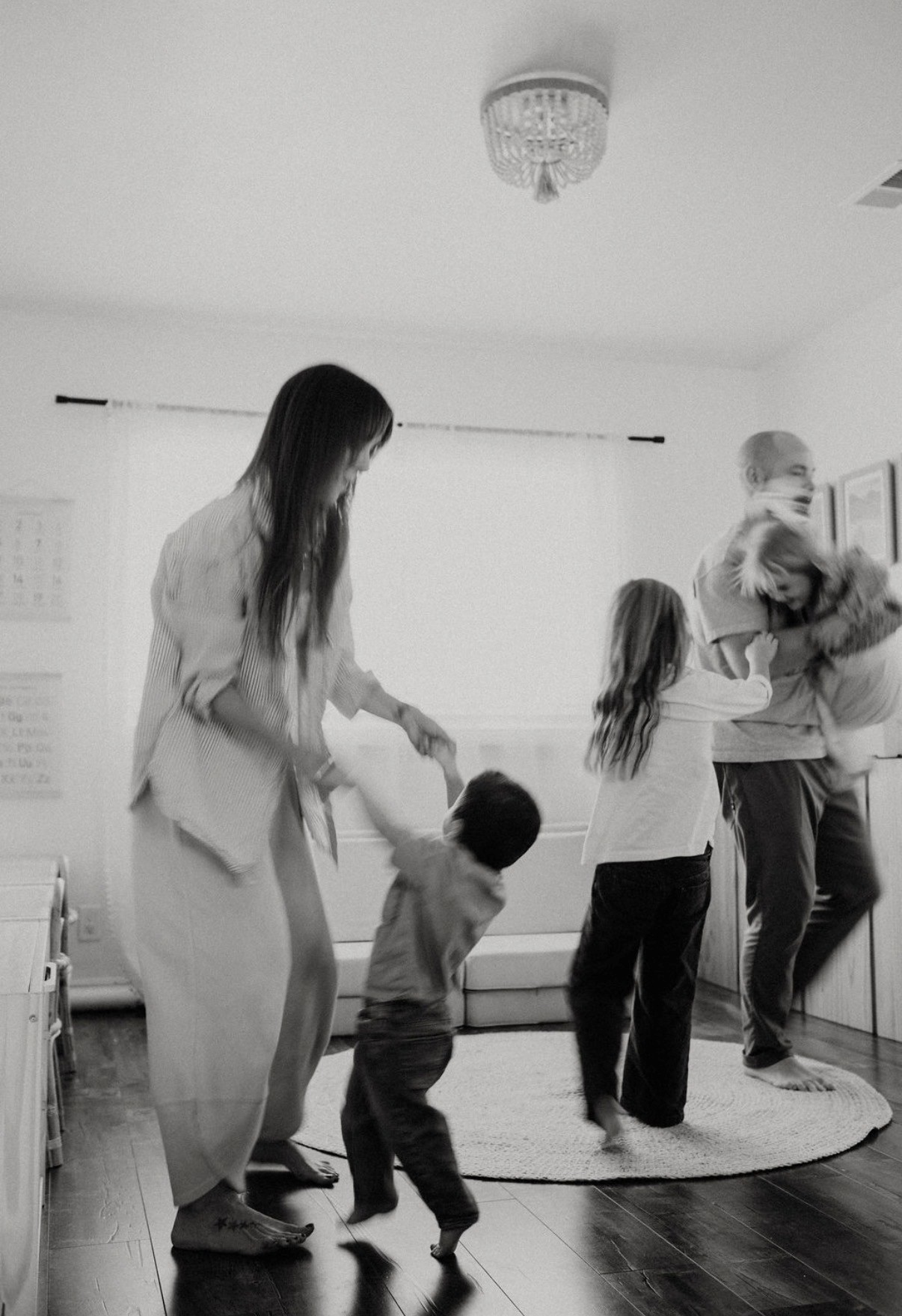
Brittaney Carpenter is the type of woman who does it all and makes it look effortless—small business owner, wife and mother of three, and an accomplished multitasker, managing career, household, kids, a flock of chickens and a dog. She joined us for Rare Disease Month to talk about the birth of her son Emmett and what it was like to learn he had a rare disease.
Brittaney and her husband CJ struggled to conceive their first child and were so excited to welcome their daughter Stevie. When she learned she was pregnant a second time—and soon after found out that it was fraternal twins!—she admits to feeling some trepidation about the jump to becoming a family of five.
Then at twelve weeks, she was referred to a high-risk doctor. The doctor had nothing but compliments for Baby A—Frankie. He made it sound like Frankie was the perfect baby, so beautiful, meeting all her milestones. But when it came to Baby B—Emmett—he was silent. There were multiple concerns, including one that would require surgery at birth, but all were resolved by 26 weeks. “I just wanted a baby who was healthy,” she says. “I felt like they were picking on Emmett. There was always something!” So, while there were warning signs, the doctor was optimistic that everything was going to be okay.
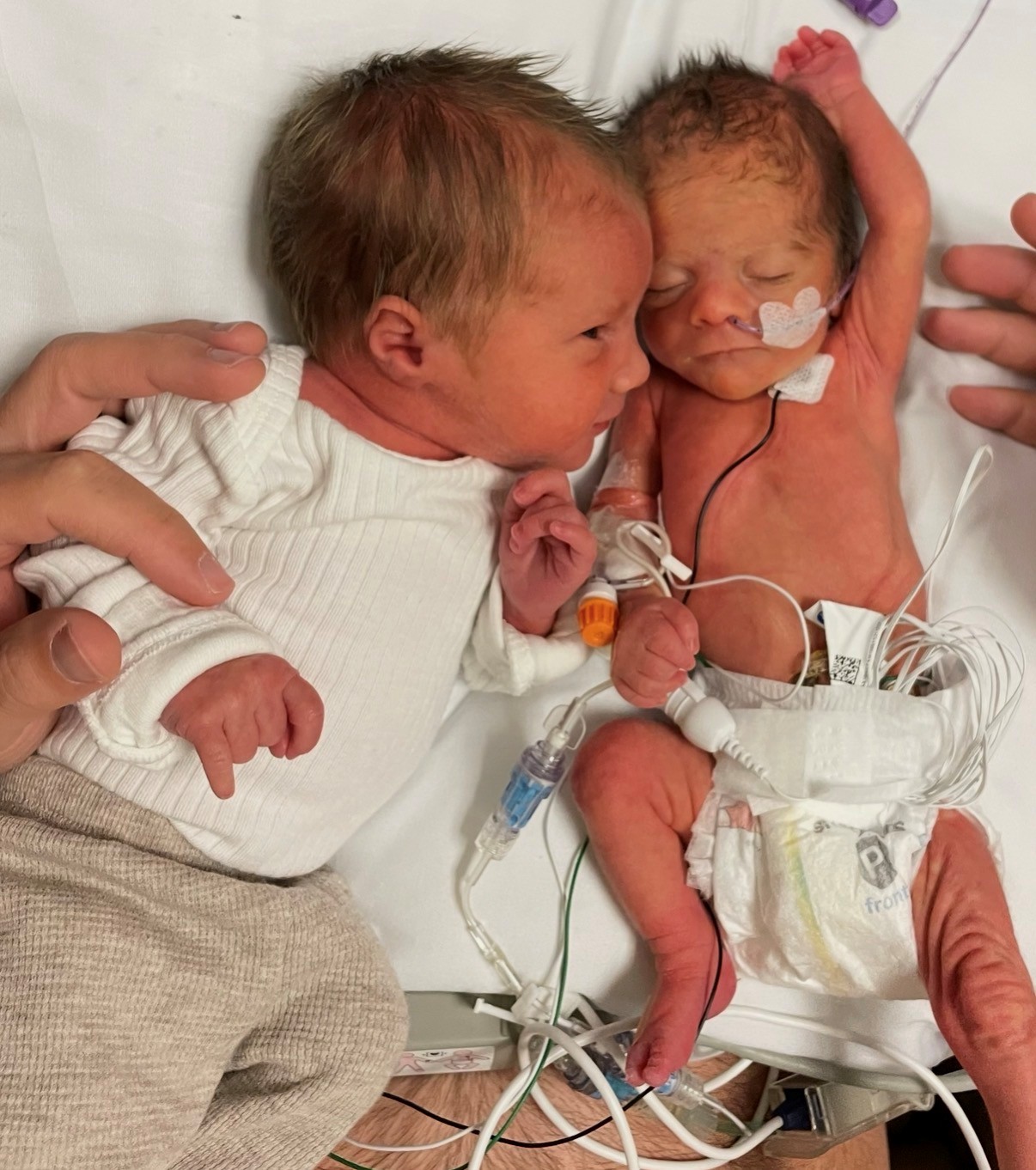
The babies were delivered at 34 weeks by C-section and transferred to the NICU. Frankie was 4 lb, 15 oz, and Emmett was 2 lb, 12 oz. Emmett was proportionally tiny, hairy, with thick eyelashes and eyebrows. The differences between the babies were attributed to possible Intrauterine Growth Restriction (IUGR)—Emmett not getting enough nutrients in utero due to his twin. One of the NICU doctors mentioned Cornelia de Lange Syndrome, but the other attending felt that Emmett could not possibly have it.
The scariest part of a diagnosis is not knowing what the future looks like.
Cornelia de Lange Syndrome (CdLS) is a rare genetic disorder characterized by distinctive facial features, growth delays, intellectual disability, and limb abnormalities. Individuals with CdLS may also experience gastrointestinal challenges, behavioral issues, and other medical concerns. Early diagnosis is important because multidisciplinary care can help manage symptoms and improve quality of life for those affected.
Emmett thrived in the NICU, and was soon off oxygen and eating from a bottle as big as he was! He was released after 21 days. When Brittaney was given a flyer about Cornelia deLange Syndrome, she remembers feeling her heart drop and being so scared of what this meant for their family. Three genetic tests came back normal. However, she and CJ agreed that once they learned about CdLS, they couldn’t unsee it. Emmett fit the pattern. Despite doctors and family members urging Brittaney and CJ that nothing was wrong, they knew something wasn’t adding up. Brittaney kept pushing.
Even without a diagnosis, Brittaney was not going to wait to pursue the best chances for her son with early interventions. She enrolled him in occupational therapy (OT), physical therapy (PT), early intervention play therapy (ET), and speech therapy to help him meet his developmental milestones. Brittaney listened to her gut and kept pressing for clarity and answers from doctors, and was rewarded with hearing Emmett’s voice for the first time with a “hi” when he was two years old.
When we reference the diagnostic odyssey that families with rare disease go through, the Carpenters are a prime example. At 6 months Emmett was referred to a geneticist at Children’s Hospital Los Angeles (CHLA). After nine months of waiting, they finally had an appointment with Dr. Matthew Deardorff, a founding member of the CdLS foundation who had just relocated to California, who diagnosed Emmett with CdLS from a clinical standpoint.
I want Emmett to be accepted for who he is—no matter what.
Now, Emmett is in preschool, which he loves. The Carpenters have assembled the best team to help him thrive. His sisters are both empathetic little girls, willing to fight for their brother. Brittaney is passionate about advocacy for mothers of children with disease.
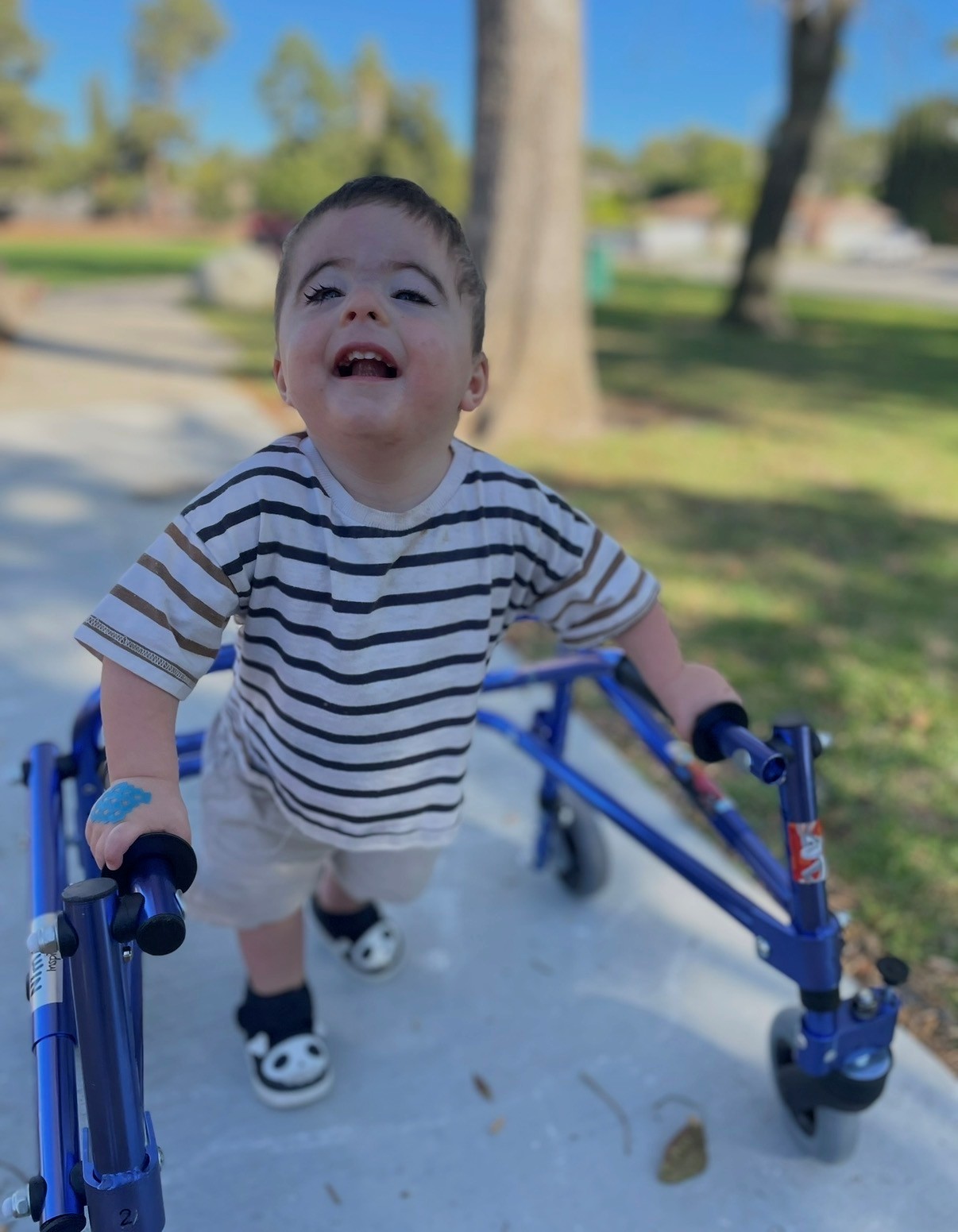
“When you learn that your child has a syndrome, it’s natural to be scared. I remember being so scared of all the unknown, writing the story as if I already knew it, prepping myself for the worst and hoping for the best. But what I have learned is that eventually you get past the 'scary' and the unknown and the journey just becomes your normal and your happy," said Brittaney Carpenter.
Resources: